
Stardew Valley remains a phenomenon even a decade after its original release, a testament to the enduring appeal of a well-crafted farming life sim. Its pixel‑art charm, deep relationship systems, and satisfying loop of planting, mining, and fishing have inspired a whole subgenre of games trying to capture that same magic. But what if you’ve already romanced every bachelor and bachelorette, restored the Community Center, and filled a shed with ancient fruit wine? Where does a player turn when they crave that cozy, absorbing rhythm on a modern console?
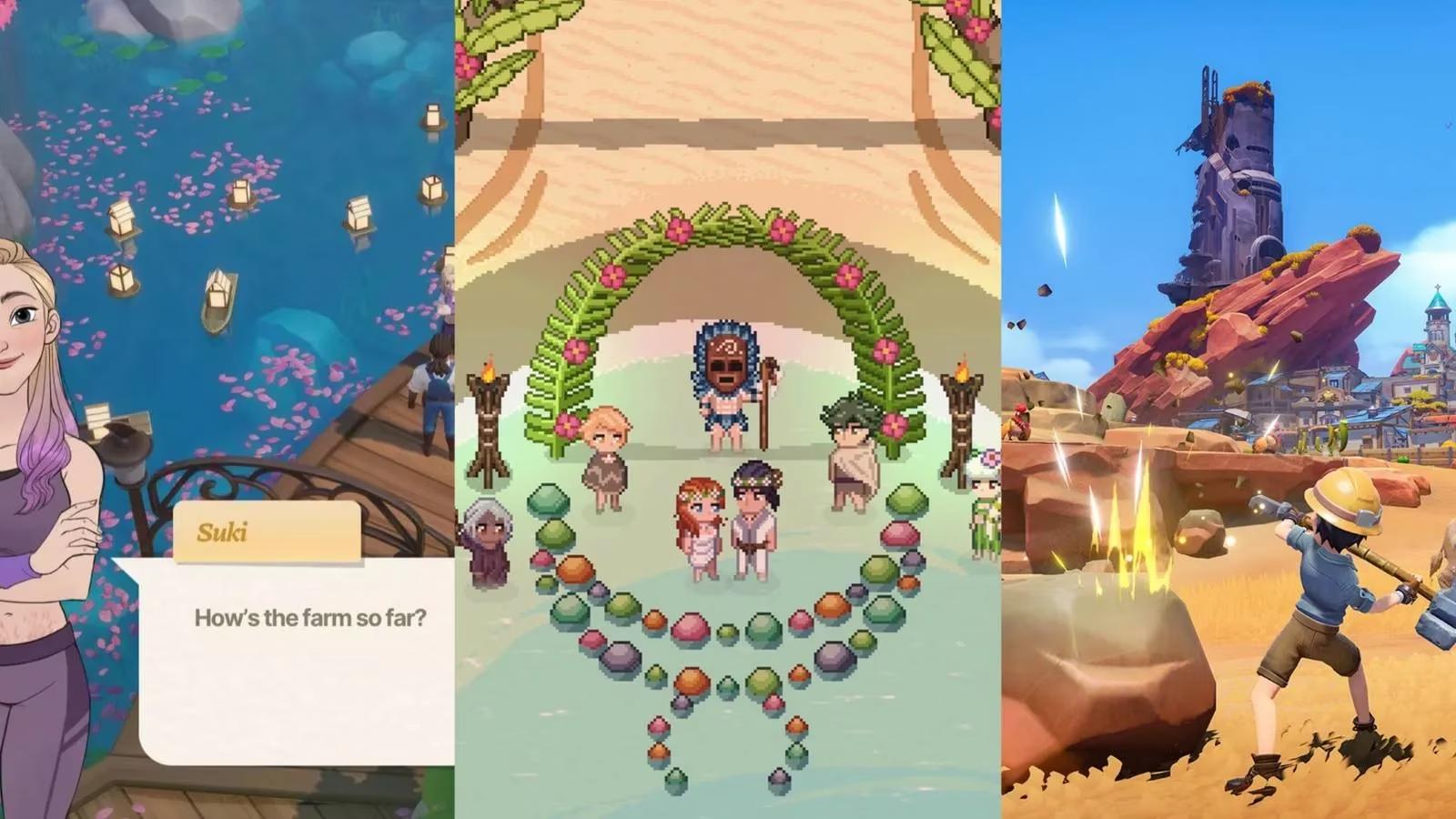
The Xbox Series X|S has quietly become a fantastic home for life sims, offering a library that goes far beyond simple clones. By 2026, many of these titles have received substantial updates, DLCs, and quality‑of‑life patches that make them shine brighter than ever. Whether you’re looking for a prehistoric twist, an alchemical apothecary adventure, or a slime‑wrangling escapade, there’s something here that will scratch that Stardew itch while providing an entirely fresh experience.
🏝️ Coral Island — A Tropical Homage with Modern Polish
For players who want something that feels instantly familiar yet visually elevated, Coral Island is the obvious choice. It doesn’t shy away from its inspiration; instead, it takes the core loop of farming, crafting, and courtship and wraps it in gorgeous 3D graphics reminiscent of a modern Disney animated film. The island setting is more than just a pretty backdrop — it introduces a stronger environmental narrative, where players work to clean up the ocean and revive a coral reef alongside the usual farm duties. The world feels richly populated with a diverse cast of well‑written NPCs, all romancable and fully voice‑acted in later updates. By 2026, the game has expanded its post‑marriage life events, making the commitment to a single island life genuinely rewarding.
⛏️ Roots of Pacha — Stone‑Age Community Building
Roots of Pacha stands out by turning back the clock. Instead of inheriting a dilapidated farm, you join a prehistoric clan and immediately assume a chosen role — hunter, gatherer, farmer, or crafter — each granting a unique perk. The communal focus transforms the experience: NPCs have their own professions and family lineages, and you’ll see the clan’s children grow alongside your own inventions. Why simply exploit nature when you can befriend it? A magical flute lets you tame wild animals, turning them into mounts or helpers. That shift from domination to symbiosis gives Roots of Pacha a surprisingly philosophical tone, asking: what if progress were measured by harmony rather than output?
🧪 Potion Permit — The Healer’s Dilemma
Potion Permit tosses the hoe and watering can aside in favor of a mortar and pestle. You play as an apothecarist sent to a town that has turned against modern medicine, and your job is to diagnose quirky ailments by gathering ingredients and brewing cures. An energy meter limits daily resource collection, while combat encounters force a tense risk‑reward calculus. Should you venture into the dangerous depths of the woods for a rare herb when your health is already low? The game consistently poses these small, anxious questions, transforming the familiar grind into a push‑your‑luck healer simulation. It’s a formula twist that feels genuinely novel, especially after the 2026 quality‑of‑life rebalance that smoothed the early‑game energy curve.
🤠 My Time at Sandrock — A Living, Breathing Frontier
Set in a post‑apocalyptic desert where you take over a run‑down workshop, My Time at Sandrock layers town‑construction on top of traditional life sim mechanics. The game runs three parallel plotlines simultaneously, rotating narrative events so something always feels fresh without becoming overwhelming. What truly sets it apart is how actions ripple outward: over‑harvesting a resource can spike its price or even make it temporarily unavailable, while completing civic commissions changes the physical layout of the town. By 2026, the multiplayer co‑op mode has been fully integrated, allowing friends to build a frontier outpost together, and the romance arcs have deepened with jealousy dynamics and couple‑specific side quests.
🐄 Story of Seasons: A Wonderful Life — The Cycle of Generations
The Harvest Moon series that originally inspired Stardew Valley has stumbled in recent years, but Story of Seasons: A Wonderful Life is a lovingly crafted remake that reminds us why the formula is so powerful. The game spans a full 30 in‑game years; your farmer will age, marry, and have a child whose personality and career aspirations are shaped by your actions. Villagers grow old, pass away, and are replaced by their children. Can a game about the slow march of time still feel cozy? Absolutely — because it grounds its melancholic beauty in the enduring satisfaction of a well‑tended field.
👑 Medieval Dynasty — From Peasant to Patriarch
For those who find Stardew’s scope a bit too gentle, Medieval Dynasty offers a survival‑infused pivot. You begin with literally nothing — no tools, no shelter, no coins — and must fell trees, hunt, and farm to build a village from the dirt up. As your settlement attracts new residents, you can assign them jobs, creating a self‑sustaining colony. But starvation, harsh winters, and aggressive wildlife mean mistakes can be fatal. It’s a jack‑of‑all‑trades experience that juggles construction, farming, resource management, and even dynasty progression, since you’ll eventually play as your heir. The 2026 next‑gen update has added co‑op, making the daunting early grind a cooperative undertaking.
🦠 Slime Rancher 2 — Charming Chaos on the Ranch
Slimes are the livestock here, bouncing bundles of adorable chaos that you raise, crossbreed, and feed to harvest their plorts — a valuable resource used for upgrades and gadgets. The core loop is pure exploration: venture into beautiful, alien biomes, discover new slime species, and figure out how to keep them safely penned without triggering a slime‑splosion. There’s a Pokémon‑like compulsion to uncover the rarest combinations, and while NPC interactions are limited, the slimes themselves have so much personality that you won’t miss the small talk. The game’s 2026 expansion, Into the Labyrinth, doubled the map size and introduced puzzle‑laden caverns that require specific slime abilities to navigate.
🏮 Mineko’s Night Market — A Whimsical Weekly Rhythm
Mineko’s Night Market isn’t for everyone — its deliberately slow pace and weekly action‑limit drew criticism at launch — but fans of meditative, story‑driven life sims will find a peculiar magic here. Instead of daily chores, you manage time across entire weeks, preparing crafts and goods for Saturday’s bustling night market. The game keeps asking: is it better to spend today gathering materials or deepening friendships that might unlock a vital booth? The lack of harsh failure penalties means you can soak in the Japanese‑inspired festivals, cat companions, and gentle humor at your own tempo. For players burned out on optimization, this enforced slowness is a feature, not a bug.
Each of these titles pulls a different thread from the Stardew Valley tapestry — some emphasize community, others reinvent the central activity, and a few dare to challenge your survival instincts. The beauty of the genre in 2026 is precisely this diversity: no single game has to replace Stardew entirely, because the farming sim has evolved into a whole ecosystem of its own. So, the next time you power on your Xbox Series, consider which cozy (or not‑so‑cozy) world you’d like to sink another hundred hours into.