
For years, Stardew Valley players have been blindly swinging their hoes at those wiggly little worm spots in the dirt, hoping for something good. It turns out, there's a hidden visual language to these artifact spots that most players completely miss, even after hundreds of hours in the game. A recent community discovery has cracked the code, revealing a simple way to know exactly what you're about to dig up before you even lift your tool. This isn't some obscure mod or glitch—it's a subtle feature baked right into the game's design, waiting to be noticed.
Here’s the magic trick: not all wiggling worms are created equal. 👀 Players have identified two distinct types. The first type, which signals a valuable artifact, appears as shorter, more spaced-out, and lightly colored worms. They have a pale, almost sandy look and seem to wiggle more independently of each other. The second type, which yields seasonal seeds or books, features longer, darker, and straighter worms. These are a richer brown, often clustered closer together, and have a more uniform, rigid appearance. Once you see the difference, you can't unsee it!
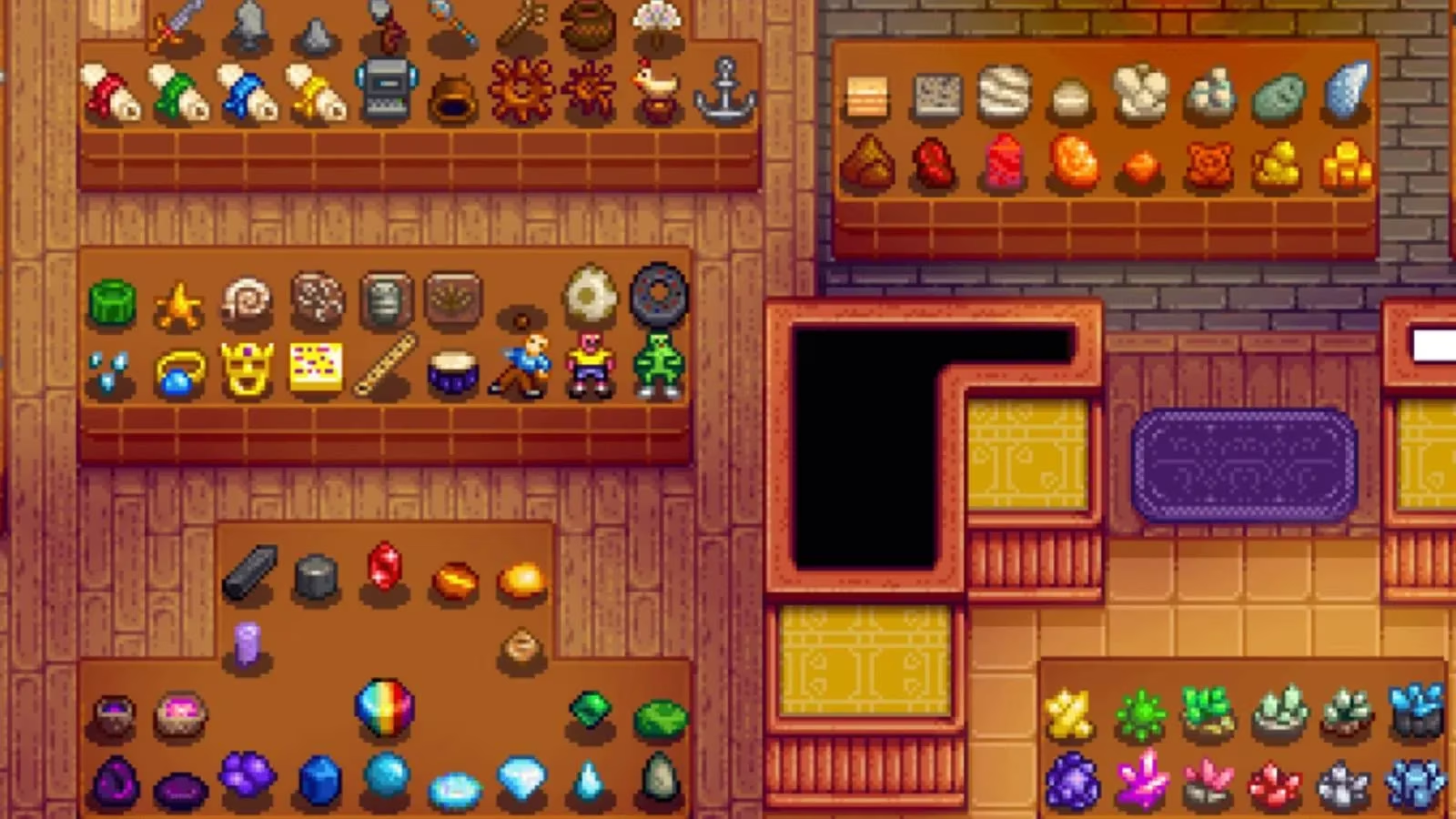
This revelation, shared by players like LobsterFew4672, has been a game-changer for efficiency. Why waste energy on a clay-filled seed spot when you could be hunting for that elusive Dinosaur Egg or Prismatic Shard? The artifacts hidden under the light-worm spots are the real treasure. They're the key to completing the museum collection, which grants unique rewards like the Rusty Key, Crystalarium, and even Starfruit Seeds. Some artifacts, like the Dinosaur Egg (which can be hatched!) or the Prismatic Shard (for the Galaxy Sword), are incredibly powerful items in their own right.
Meanwhile, the dark-worm spots are far from useless. The seeds they provide are always plantable in the current season—or the next one if you're at the season's end. This makes them a fantastic, free source of crops for your farm. They can give you anything from parsnips to pumpkins, helping you save gold and diversify your fields without a trip to Pierre's.
It’s wild to think how many players, like UnnieAntonia who logged over 300 hours, never realized this distinction existed. Part of the charm—and occasional frustration—of Stardew Valley is its hands-off approach. The game famously provides minimal tutorials, opting instead to let players discover its secrets through exploration and community sharing. This particular feature, as pointed out by user old_soul1999, was actually introduced in the 1.6 update a few years back, which explains why it flew under the radar for so long.
So, what does this mean for your daily routine in Pelican Town? Here’s a quick guide to applying this knowledge:
-
On the Farm & in Town: Scan the ground. Prioritize the light, wiggly worms for artifact runs, especially if you're still filling the museum.
-
In the Mountains or Forest: Same rule applies! Artifact spots can appear anywhere.
-
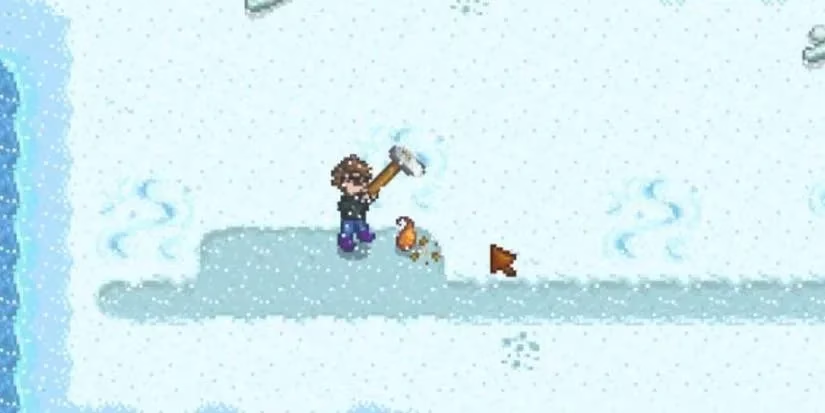
Winter is Prime Time: With no crops to tend, winter becomes the perfect season for dedicated artifact hunting. The snow-covered ground makes the worm spots even easier to spot.
-
The Hoe is Key: Remember, only using your hoe on these specific worm tiles will yield the special items. Randomly tilling empty dirt will mostly just give you clay.
This is just one of countless 'aha!' moments that give Stardew Valley its legendary replay value. The game is layered with these subtle details—little secrets that players uncover at 50, 500, or even 1,200 hours in. It creates a wonderful sense of shared discovery within the community. One player's simple observation on a forum can revolutionize how thousands of others play. It turns a mundane chore like digging into a mini-game of identification and reward.
In 2026, with the game still receiving love and updates, these community-driven discoveries keep the experience fresh. It’s a testament to the game's design that players are still finding new layers of depth years later. So next time you're running through Cindersap Forest or across the beach, take a closer look at the ground. That little squiggle might just be telling you exactly what treasure lies beneath. Happy digging, farmers! 🪱⛏️✨