
It’s been a few years since Eric Barone started teasing a spooky confectionary called Haunted Chocolatier, and by 2026, the whispers have grown into a full-blown sugar rush of anticipation. The man who gave the world Stardew Valley clearly isn’t done with pixelated bliss, but this time he’s swapping parsnips for pralines and junimos for ghosts. The big question on everyone’s mind: just how much DNA will the two games share? From the early snippets, it’s clear the wholesome art style and light life-sim mechanics are sticking around, but the combat now leans towards action-RPG territory. Yet among all the chatter about weapon crafting and chocolate crafting, one design choice could genuinely define whether Haunted Chocolatier becomes a delightful surprise or a sugary clone—NPC relationships. And frankly, it’s time those relationships started having a darker side.
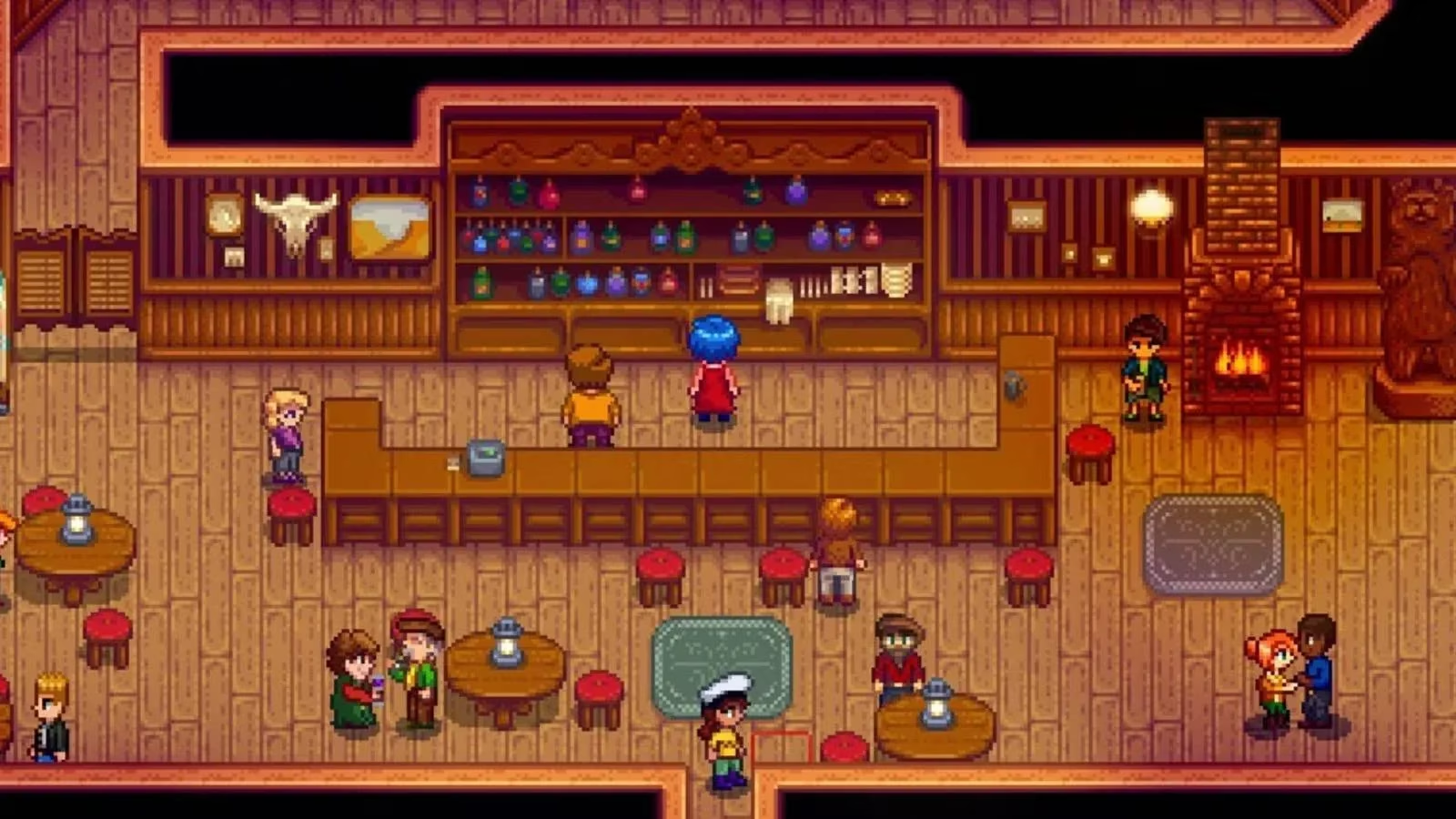
Stardew Valley is a masterpiece of comfort, but anyone who has spent enough time in Pelican Town knows the social system is about as spicy as a bowl of plain rice. You can’t truly fall from grace. Miss a birthday, dig through someone’s trash while they watch, gift them literal sap—sure, they’ll frown for a second, maybe dish out a passive-aggressive line, but the underlying heart-level won’t plummet into abyssal hatred. The meter just hovers politely near neutral, like a Canadian waiting for a bus. This isn’t a dig at the game; it’s a deliberate choice that makes the experience forgiving. But after ten years of seeing farmers marry and divorce on a whim without any real social consequences, the cracks in the sugar glaze are showing.
Does that sound like life to you? Real relationships are messy. They curdle, they spoil, and occasionally they explode into a drama that rivals a telenovela. Why should a cozy game be any different? If Haunted Chocolatier truly wants to evolve beyond its spiritual predecessor, it needs to let players be the villain of someone’s story, or at the very least, a nuisance with long-term repercussions. The mere absence of “negative relationship points” waters down the role-playing potential of any life sim. After all, how can a chocolatier’s tale feel alive if every villager remains eternally on the brink of becoming a bestie?
The simplest argument for letting relationships turn sour is punishment. If a player routinely ignores the town baker or sides with a rival candy maker during a tense festival bake-off, the baker should not merely sigh and offer a discount on croissants the next day. They should fume. Maybe their dialogue turns ice-cold. Perhaps they refuse to sell you unique ingredients, or their shop hours mysteriously shorten whenever you approach the door. This isn’t cruelty for cruelty’s sake—it’s consequence, the very thing that makes a sandbox feel reactive.
But here’s where things get deliciously complex: bad relationships could also be a gameplay strategy. Imagine an NPC so unbearably smug, with a mustache that practically twirls itself, that players actively want to cultivate animosity. Instead of just ignoring him, they could perform specific actions—pranks, sharp words, supporting his rival—to push the friendship meter deep into the red. What’s the reward? Perhaps a hidden cutscene where he finally melts down, or a rare item that only drops when someone despises you enough to throw it in your face. This isn’t just “cozy” anymore; it’s a gleeful sandbox of pettiness, and isn’t a little bit of mischief what makes life sims memorable?
Trading off relationships for tangible rewards could also revolutionize quest design. Picture this: a ghostly blacksmith offers to forge an unbreakable chocolate sword, but only if you help her steal a cursed gem from the local sweetheart, a perpetually cheerful NPC who uses it to keep the town’s chocolate river flowing. Siding with the smithy nets you the weapon and a lifelong enemy in the sweetheart, whose storefront becomes a hostile place where even breathing near her prices costs extra. Conversely, warning the sweetheart about the heist strengthens your bond with her, unlocking exclusive recipes, but the blacksmith will never speak to you again. That’s the kind of weight that makes a social system feel less like a checklist of gift preferences and more like a living, breathing world.
Of course, Eric Barone has emphasized that Haunted Chocolatier will focus more on action and combat. Skeptics might argue that pouring design effort into dynamic hatred feels unnecessary when the core loop is slaying monster-marshmallows or whatever lurks in the cocoa mines. But that’s precisely why negative relationships matter even more here. In Stardew, combat was an optional afternoon activity; in Haunted Chocolatier, it’s the main course. If the social layer remains flat and forgiving, then the town segments risk becoming a dull lobby between dungeons—just a place to drop off loot and buy potions. A system where NPCs actively remember your deeds (good or wicked) ties the action directly to the world, making every choice reverberate. Did you burn down the mill to save it from a chocolate-mold infestation? The miller should have an opinion that lasts longer than a single dialogue box.
There’s a familiar counter-cry from cozy-game purists: “we play these games to escape stress, not to manage feuds!” And they’re not wrong; nobody wants a life sim that feels like a corporate HR simulation. But having the option to be disliked is not the same as forcing drama upon everyone. Players who prefer universal adoration could still pursue that path—just as peacefully as ever. The addition of negative reputations simply widens the canvas for those who want their chocolatier to be a bit of an anti-hero, a rogue with a sweet tooth and a sharp tongue. Imagine the stories that would spawn: the player who corrupted the town’s halloween parade so badly that the mayor placed a hex on them, or the self-made nemesis who spent days brewing a terrible chocolate liqueur just to make a grumpy hermit sick. Those tales don’t exist in a world where every heart meter is one-dimensional.
As we inch closer to the game’s eventual release, this design choice feels more urgent than ever. 2026 has already seen a wave of life sims that push boundaries in combat and customization, but few dare to let friendships breathe as fully as they should. Haunted Chocolatier has the pedigree and the spooky charm to be the one that finally asks: why can’t we have enemies? After all, in a town where chocolate haunts you and ghosts might work the counters, a little human (or supernatural) resentment would fit right in. So here’s hoping Barone sprinkles some darkness into the dough—because the sweetest confections always have a pinch of salt.