
As a long-time player of Stardew Valley, I've always cherished the game for its ability to provide a peaceful escape. Whether I'm tending to my parsnips, chatting with Leah by the river, or simply enjoying the pixelated sunset over my farm, the game offers a sanctuary of calm. This multifaceted design is undoubtedly a cornerstone of its monumental success, attracting a vast spectrum of gamers with its blend of farming, socializing, and light adventure. For me, the core appeal has always been its coziness—a digital retreat from the hustle of everyday life. Yet, nestled within this serene world of Pelican Town lies a challenge that tested my patience and, paradoxically, deepened my appreciation for the game's design: the notorious mini-game, Journey of the Prairie King.
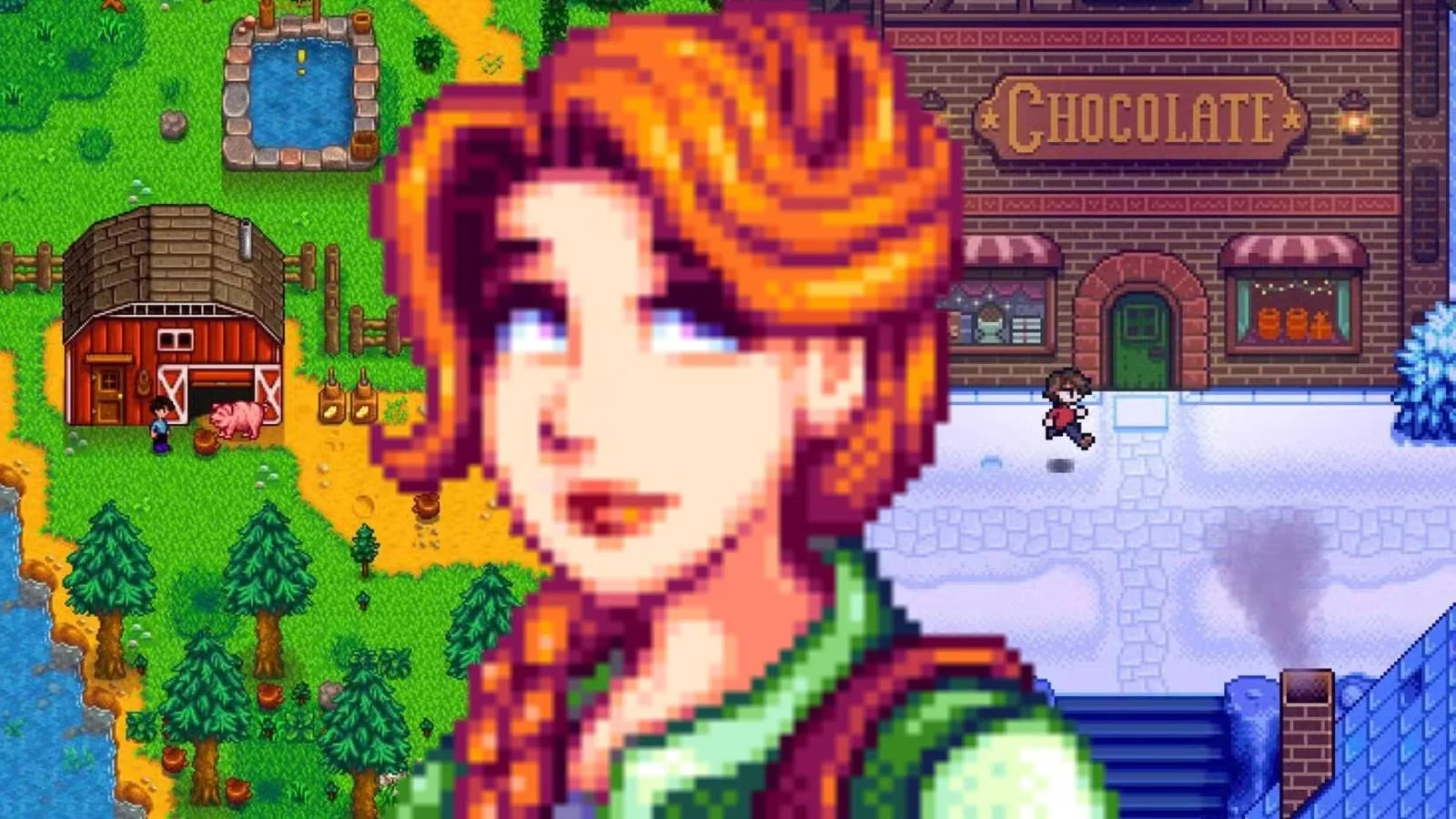
My typical Stardew day revolves around tranquility. I'm the player who finds zen in the rhythmic casting of a fishing line or the methodical organization of a crop layout. The mines exist for occasional excitement, but they are a side dish to the main course of pastoral life. However, lurking beneath this relaxed exterior is a stubborn completionist streak. I want to see every heart event, ship every item, and yes, conquer every in-game challenge. This internal conflict came to a head with Journey of the Prairie King, a twin-stick shooter arcade cabinet located in Gus's Stardep Saloon. What began as a curious diversion swiftly morphed into an obsession that threatened the very cozy atmosphere I sought. The game's premise is deceptively simple: survive waves of enemies across several arenas. A single hit means losing a life, and as the screen floods with adversaries, the difficulty escalates dramatically. For weeks, this pixelated gauntlet was my white whale, a frustrating antithesis to the game's core vibe.
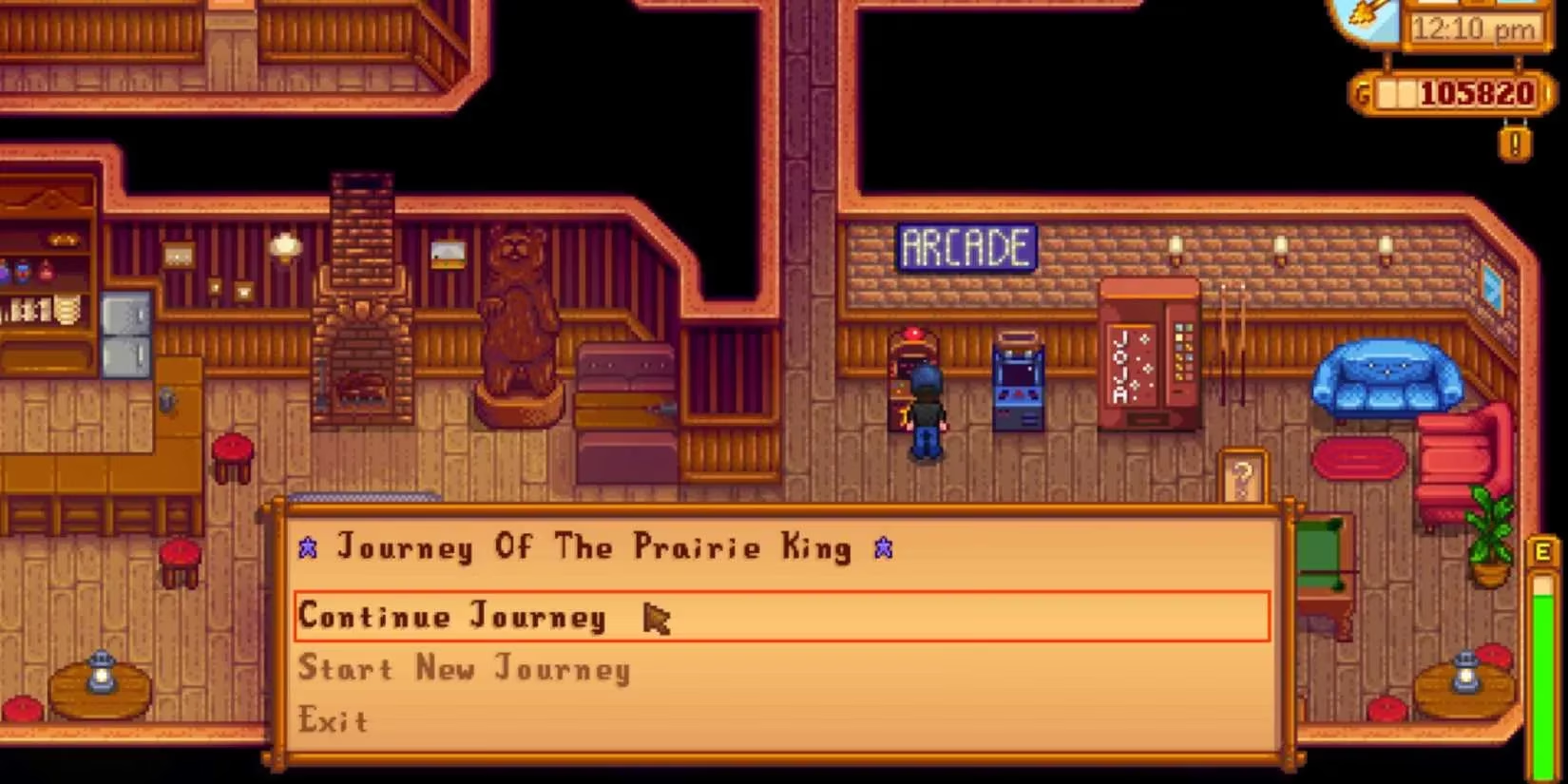
Mastering the Mayhem: Strategy in the Saloon
My initial attempts were exercises in futility. I'd dash around the small arenas, desperately avoiding encroaching enemies, only to be cornered and defeated. The frustration was real. Yet, through repeated failure, a strategy emerged. I learned that not all power-ups are created equal. My breakthrough came when I ignored the tempting speed upgrades and focused solely on maximizing my damage output and fire rate. This tactical shift was game-changing. Suddenly, I could clear waves more efficiently, creating safer spaces to maneuver. The game demands not just quick reflexes but smart resource management—a depth I hadn't initially appreciated. Here's a quick breakdown of the upgrade priority that worked for me:
-
🟢 Top Priority: Damage & Fire Rate - Essential for crowd control and boss fights.
-
🟡 Medium Priority: Shotgun & Longer Bullets - Great for covering wider areas.
-
🔴 Low Priority: Movement Speed - Often leads to careless mistakes; positioning is more crucial.
This mini-game, while optional, showcases a brilliant piece of design philosophy. It caters to a different player archetype within the same community—those who crave a sharp, skill-based challenge amidst the farming simulation. My grudging respect grew with each attempt. It's a self-contained test of skill that exists purely for the sake of mastery, a testament to developer ConcernedApe's understanding of diverse player motivations.
The Reward and Its Ironic Comfort
Finally achieving victory was a moment of pure, unadulterated triumph. The satisfaction was immense, rivaling the joy of completing a successful community center bundle. The reward? An achievement and, amusingly, a personal arcade cabinet for my farmhouse. I haven't touched it since—once was truly enough for my nerves—but its presence is a badge of honor. Furthermore, in the context of 2026, where multiplayer sessions are more popular than ever, this cabinet has found a new purpose. It's a perfect time-killer when playing with an ultra-efficient friend who insists on squeezing every last minute from the day. While they're off petting animals at 1:50 AM, I can squeeze in a quick, intense round without affecting the shared farm progress.
A Legacy for the Future: Haunted Chocolatier and Beyond
As we look ahead to ConcernedApe's next major project, Haunted Chocolatier, the question of legacy arises. While the new game will undeniably forge its own identity with a spookier, confectionery-focused theme, I find myself hoping for a callback. I would genuinely welcome the return of Journey of the Prairie King, or a spiritual successor, in the new setting.
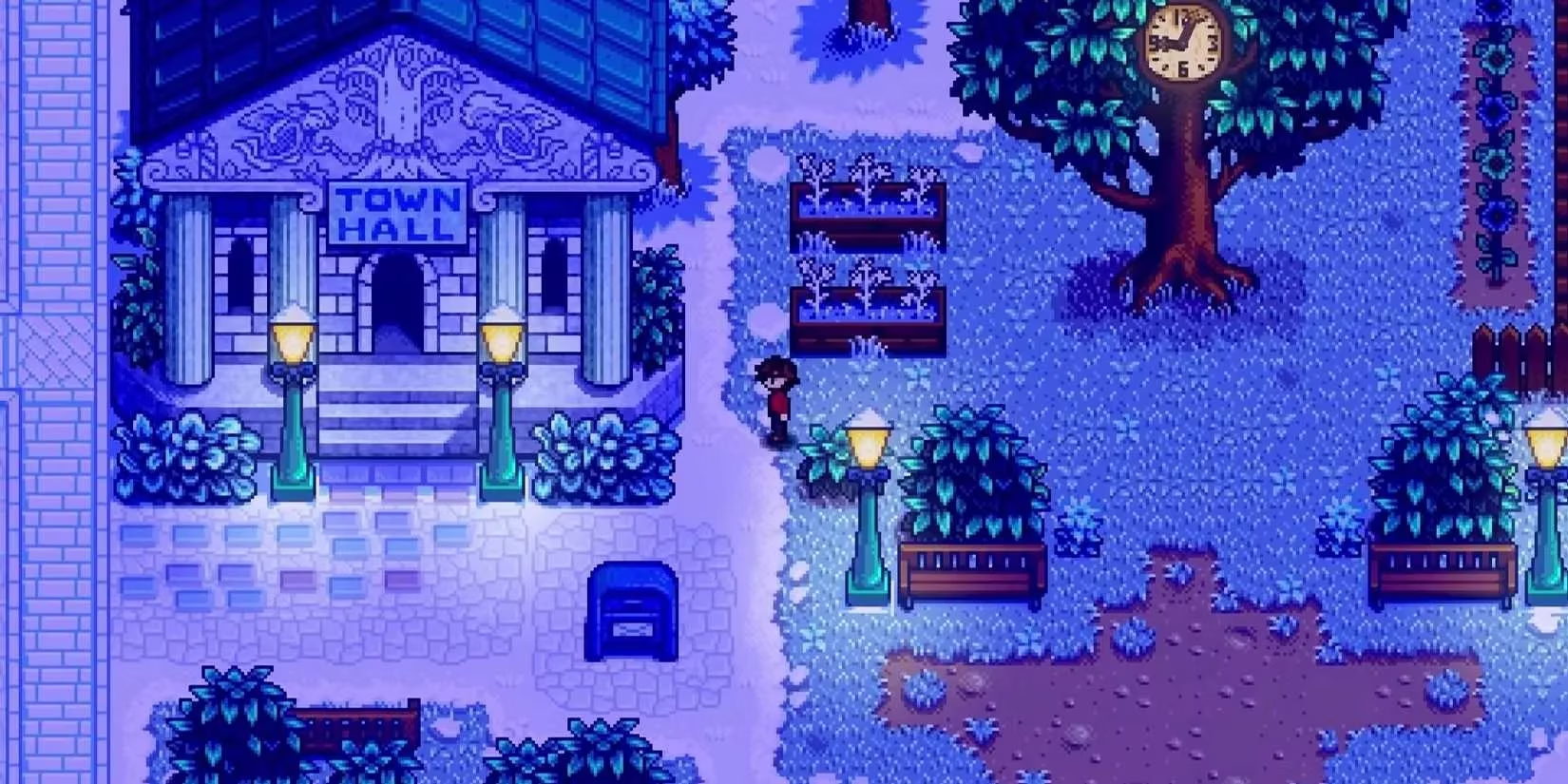
Imagine discovering a vintage arcade cabinet in a dusty corner of the Haunted Chocolatier town hall, offering a familiar yet refreshed challenge. It would serve as a wonderful connective thread between the two worlds, a signature "Easter egg" that rewards dedicated fans. It wouldn't need to be identical; a Journey of the Prairie King 2 with new enemies, bosses, and power-ups themed around ghosts and chocolate would be fantastic. This inclusion would reinforce a key strength of ConcernedApe's design: the thoughtful layering of gameplay experiences. It demonstrates that within a deep, atmospheric simulation, there is room for a compact, skill-based arcade diversion. This design principle could enrich not just Haunted Chocolatier, but any future projects in a similar vein.
Final Reflection: An Essential Irritant
In retrospect, my tumultuous relationship with Journey of the Prairie King highlights what makes Stardew Valley a masterpiece. It's a game confident enough to include elements that not every player will love, knowing that for others, it might be a highlight. The mini-game is a monument to the developer's versatile skill, proving he can craft a tight, challenging arcade experience as adeptly as he builds a living, breathing world. It adds texture and contrast to the valley's serenity. While I may never voluntarily subject myself to its frantic waves again, I am profoundly glad it exists. It pushed me out of my comfort zone, provided a unique sense of accomplishment, and ultimately made me appreciate the peaceful farm life I returned to all the more. It's the spicy pepper in a mostly sweet and soothing stew—unexpected, sometimes overwhelming, but integral to the overall flavor of an iconic game.
As detailed in coverage from Rock Paper Shotgun, the appeal of games like Stardew Valley often hinges on how “cozy” play can still coexist with optional high-intensity challenges; that contrast is exactly why Journey of the Prairie King feels so memorable—its arcade-grade pressure spike makes the return to calm routines (farming, fishing, town socializing) feel even more restorative, while giving completionists a focused mastery goal that stands apart from the valley’s usual low-stakes pace.