
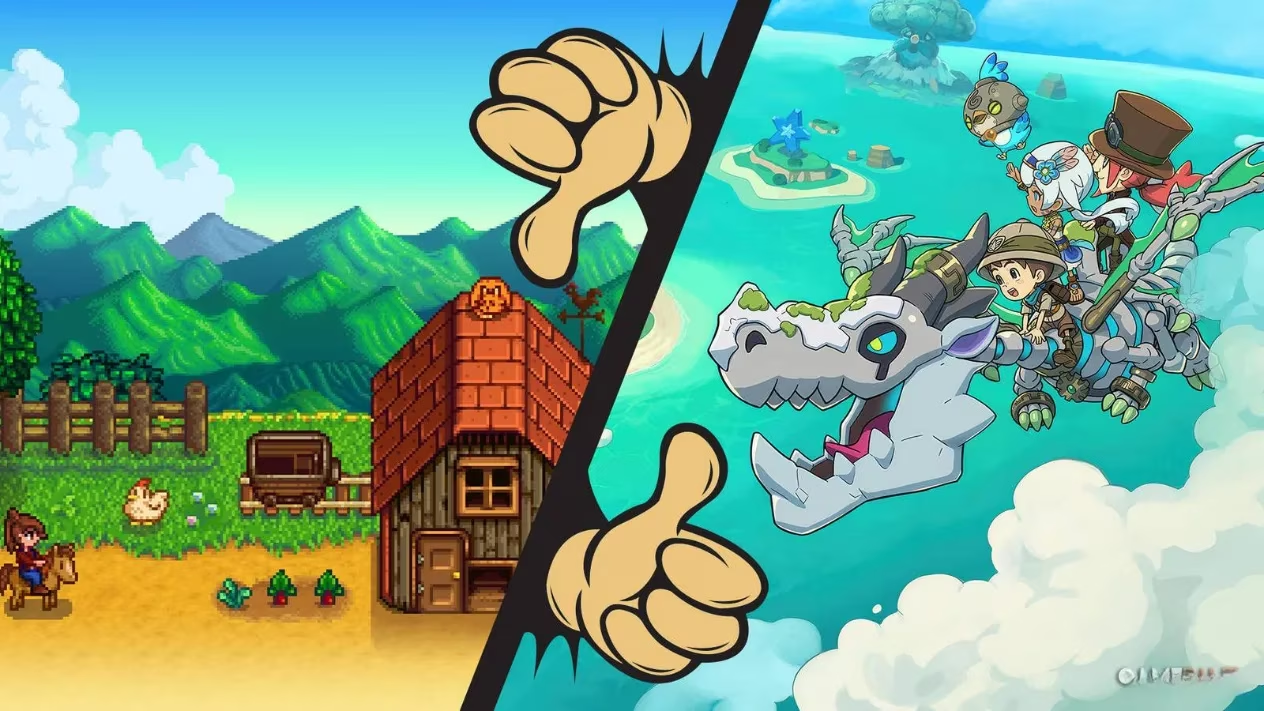
In the bustling world of cozy games, two titles often stand out for aspiring farmers, adventurers, and crafters. While Stardew Valley has long been celebrated as a genre-defining masterpiece, its intricate systems and hidden demands can sometimes feel like a daunting mountain to climb for newcomers. But what if there was a path that offered the same heartwarming charm and rewarding progression, but with a gentler, more welcoming slope? Enter Fantasy Life, a game that masterfully simplifies the cozy formula without sacrificing its soul, creating an accessible haven for players seeking relaxation over relentless optimization. It presents a fundamental question: can a game be deeply engaging without being demanding?
The Liberation of Modular Progression 🎭
One of the most striking differences lies at the very core of player identity. Stardew Valley asks you to be a farmer—a role you can expand, but one that always forms your foundational duty. Fantasy Life, true to its name, asks a different question: Why choose just one life? Its genius lies in a modular class system that allows players to switch between vocations—or "Lives"—like Paladin, Carpenter, Miner, or Angler, on a whim. There is no permanent commitment, no fear of wasting skill points on a path you might not enjoy. This design philosophy fundamentally shifts the player's mindset from one of long-term planning and potential regret to one of boundless curiosity and experimentation. Want to spend the morning smithing a new sword and the afternoon fishing for the town's legendary catch? Fantasy Life not only allows it but encourages it. This freedom eliminates the pressure to "min-max" or optimize a single build from day one, a common anxiety point in more rigid progression systems.
A World Designed for Clarity, Not Cryptic Clues 🗺️
Exploration in Stardew Valley is a beautiful, often mysterious endeavor. Players learn through observation, experimentation, and sometimes, community-made guides, to discover which forageables appear in which season or which gift each villager secretly loves. Fantasy Life takes a more direct approach. Its world is thoughtfully segmented into clear zones, each with a defined purpose and resource distribution. Need specific ore for your blacksmithing Life? The game guides you to the mountainous region where it's plentiful. Looking for rare herbs for an alchemy recipe? The forest zone is marked on your map. This structured clarity ensures players spend their time enjoying their chosen activities rather than searching for how to start them. NPC interactions reinforce this: they provide concise quests and helpful hints, functioning as clear guides rather than puzzles to be solved. Isn't it refreshing to know exactly where to go to progress, allowing you to focus on the joy of the task itself?
The Absence of the Ticking Clock ⏳
Perhaps the most significant source of stress in Stardew Valley is the relentless passage of time. Crops must be planted in specific seasons and watered daily, relationships decay without consistent attention, and missing a festival or a villager's birthday feels like a lost opportunity. This creates a compelling, sometimes tense, cycle of management. Fantasy Life dismantles this pressure entirely. There are no seasons that cause your gathered flowers to vanish, no crops that wither overnight if neglected, and no social bonds that fray because you spent a week dungeon-crawling instead of gift-giving. The game operates on a flexible, player-paced timeline. You can master the Carpenter Life for fifty hours without ever touching a sword, and the combat Life will be waiting for you, unchanged and accessible. This design choice validates a player's natural rhythms, asking, what if a game respected your time and mood instead of demanding regimented dedication?
Streamlined Social Mechanics: Connection Without Obligation 👋
Stardew Valley's heart is arguably its community. Unlocking cutscenes, mastering gift preferences, and eventually marrying a partner are deep, rewarding systems that mirror the slow build of real relationships. However, they also represent a significant layer of management. Fantasy Life offers a different social contract. Here, NPCs primarily serve as quest-givers, shopkeepers, and sources of lighthearted, humorous dialogue. While you can build camaraderie, there is no complex relationship meter to fill, no penalty for ignoring townsfolk, and no crucial gameplay features locked behind friendship levels. This streamlined approach is perfect for players who enjoy a vibrant world populated with charming characters but prefer to focus their engagement on solo progression and personal goals. It proves that a game can feel alive and social without making socialization a mandatory chore.
A Forgiving Foundation for Pure Enjoyment ✨
At its core, Fantasy Life is engineered to minimize frustration. Its systems are consistently forgiving:
-
Inventory & Resources: No item loss upon death, generous carrying capacity, and easy resource gathering reduce mundane busywork.
-
Quest Design: Clear markers and objectives prevent aimless wandering.
-
Tone: The writing is consistently upbeat and humorous, ensuring the experience remains lighthearted.
This stands in contrast to Stardew Valley, where mistakes—like accidentally hoeing a precious crop, missing a fishing festival, or passing out at 2 AM—are part of the learning curve, sometimes painfully so. Fantasy Life asks: what if the primary reward was simply the joy of playing, rather than the avoidance of punishment?
Conclusion: Two Brilliant Paths to Coziness
To be clear, this is not a declaration that one game is superior to the other. As of 2026, Stardew Valley remains an undisputed titan of the genre—a deep, rich simulation that rewards meticulous planning and dedication with immense satisfaction. Its layers of interconnected systems (farming, mining, relationships, community restoration) create a uniquely impactful world. Fantasy Life, however, carves its own essential niche. It serves as the perfect introductory portal to the cozy gaming universe. With its modular Lives, pressure-free progression, clear guidance, and lighter social demands, it delivers the core fantasies of crafting, exploring, and growing in a world that feels perpetually welcoming. For anyone who has ever looked at Stardew Valley's sprawling farm and intricate calendar with a sense of intimidation, Fantasy Life extends a friendly hand and says, "Come on in, the water's fine, and you can change your swimsuit anytime you like." It is the ultimate recommendation for the casual gamer or the seasoned player seeking a truly relaxed, stress-free adventure.