
In 2026, I opened Stardew Valley expecting the familiar comfort of my little farm: neat rows of parsnips, a chest full of ore, and a dog who has learned exactly where to stand in the doorway. I have played this game for years, and I thought I had seen every clever trick the community could invent. Then a single community post stopped me cold. Someone had turned their farm into Vincent van Gogh's The Starry Night. Not a painting hung on a wall. Not a modded screenshot of a museum. A farm layout, built from Stardew Valley's own grid, items, and plants. I zoomed in expecting the illusion to fall apart. It did not.
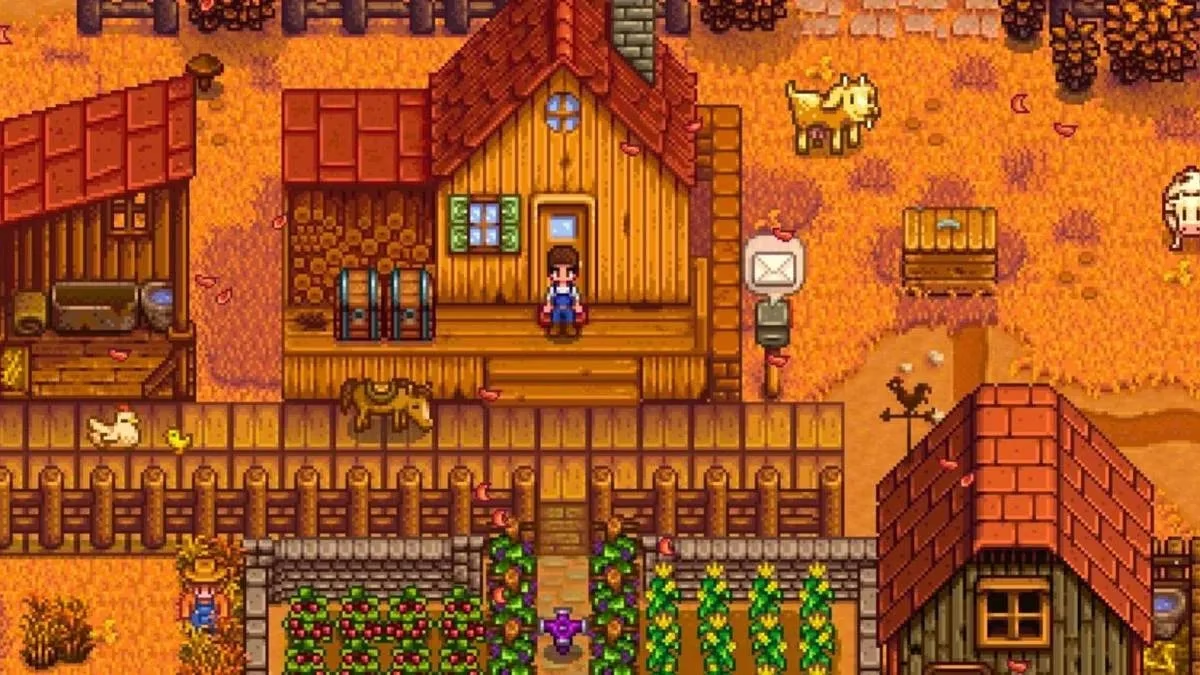
The player behind it, stelllajo, reportedly spent more than eight hours on the build and used noclip mods and the CJB Item Spawner to gather the exact pieces they needed. I know that sentence might make some purists twitch. I understand the reflex. But the more I looked at the farm, the more I saw the mods as scaffolding rather than the achievement itself. The achievement is the composition: the swirling sky, the glowing stars, the sleeping village, all translated into a language of crops, paths, fences, and furniture. Matching the correct combination of items and plants to create the right shades must have been a puzzle inside a puzzle. Honestly, that part may have taken longer than the build.
That is where my first strange metaphor comes in. Recreating The Starry Night in Stardew Valley looks like embroidering a galaxy with a box of mismatched buttons. Every button is the wrong shape, but if you arrange them patiently enough, the eye stops seeing buttons and starts seeing light. The second metaphor I keep returning to is this: it is like teaching a sheet of graph paper to hold its breath and swirl. Stardew Valley is so proudly square. Its charm comes from tidy grids and predictable seasons. A build like this bends that squareness without breaking it.
I opened my own save afterward and felt a very specific kind of embarrassment. My farm has function. It has sprinklers. It has a shipping bin that is usually full. It does not have a soul-shaped hole in the shape of a night sky. I stood beside my scarecrow and stared at my neat little rows, and I realized that I had been treating the farm as a spreadsheet with grass. The Starry Night farm treats it as a canvas. That difference is simple, but it changes everything.
| Detail | What stood out to me |
|---|---|
| Time | More than eight hours of building |
| Tools | Noclip mods and CJB Item Spawner |
| Main challenge | Finding items and plants that matched the painting's shades |
| Result | A recognizable, original Van Gogh-inspired farm |
| Community reaction | Praise, surprise, and disbelief that it was possible |
What I love most is that the build is not just technically impressive. It is recognizably affectionate. You do not spend eight hours arranging pixels into a famous painting unless you love both the painting and the game. The comment section apparently filled with fellow fans praising the farm, many insisting they would never have imagined such a thing was possible in Stardew Valley. I believe them. I would have said the same thing before I saw it.
Stardew Valley has a reputation as a peaceful cozy game, but its community has a reputation for intensity too. Those two things are not opposites. Cozy does not mean passive. Cozy can mean caring so much about a fictional town that you turn its soil into brushstrokes. The community is generally positive, welcoming to outsiders, and happy to share its adoration with like-minded people. That is rarer than it should be. A build like this could easily become a competition, but the tone around it seems to be wonder. That is the healthy version of fandom.
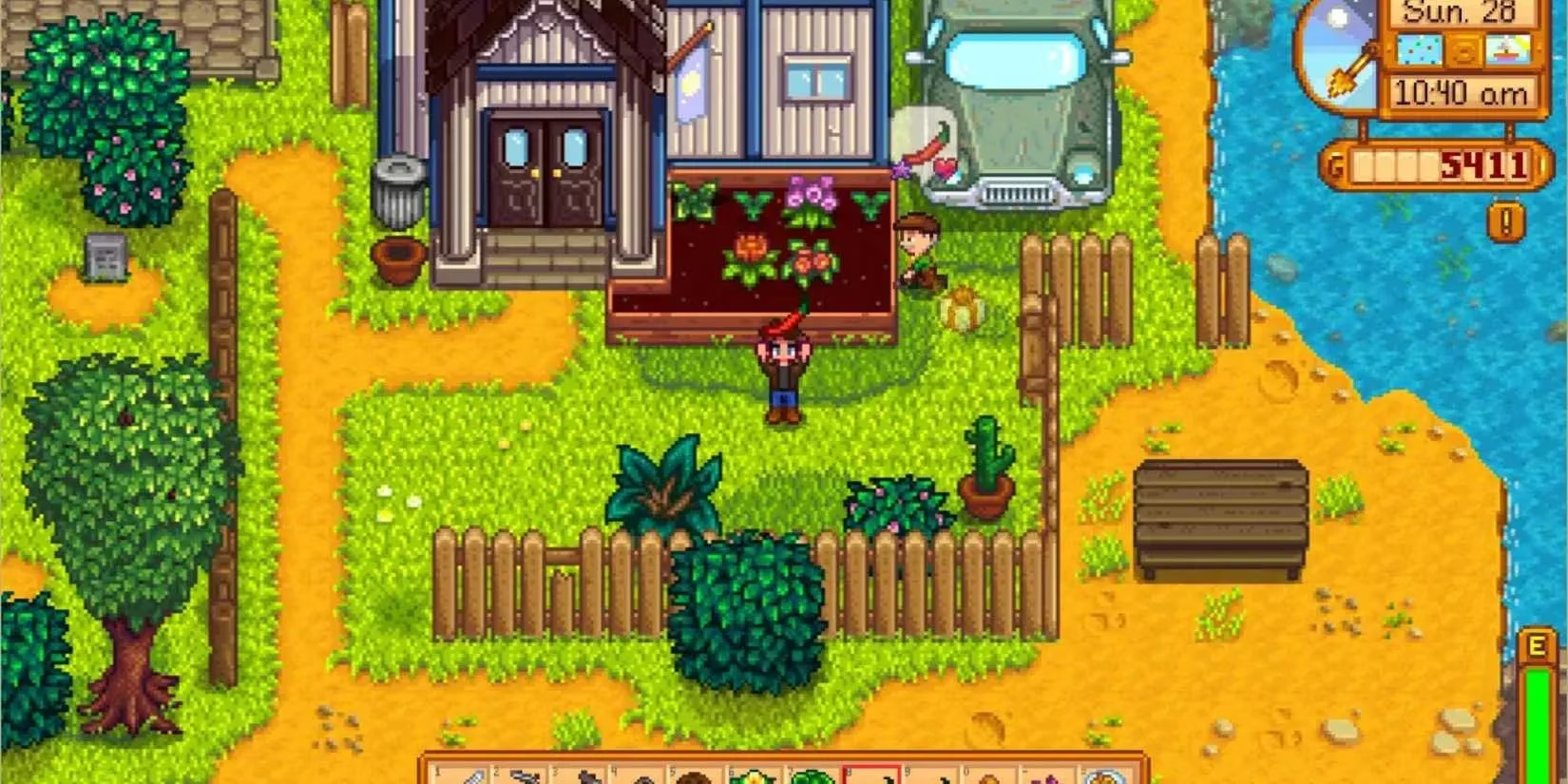
As of 2026, Stardew Valley still feels monolithic in the best way. ConcernedApe made an experience so robust that players can spend hundreds of hours farming and still find new ways to play. Some people optimize crops. Some people chase achievements. Some people build a Van Gogh painting out of seed packets and fence posts. I used to think those were different kinds of players. Now I think they are all responding to the same generous design: the game gives you a grid, and then it quietly asks what you want to say with it.
My third metaphor is the one I will carry back to my own farm: this build is like a stained-glass window made from seed packets and fence posts. Up close, it is just stuff. Step back, and the light comes through. I do not know if I will ever attempt something that ambitious. My next project might be a slightly nicer path and a flower bed that does not look like an afterthought. But I will open my save differently now. I will ask whether the farm is only working, or whether it is also saying something. That is a small shift. It is also the kind of shift that keeps a game alive for years.
Insights are sourced from Giant Bomb, whose long-running game coverage and community discussions help explain why a Stardew Valley farm recreation of The Starry Night feels so striking: it turns familiar systems of placement, decoration, and player expression into something closer to visual art, showing how creativity can expand a cozy farming sim far beyond efficiency and routine.